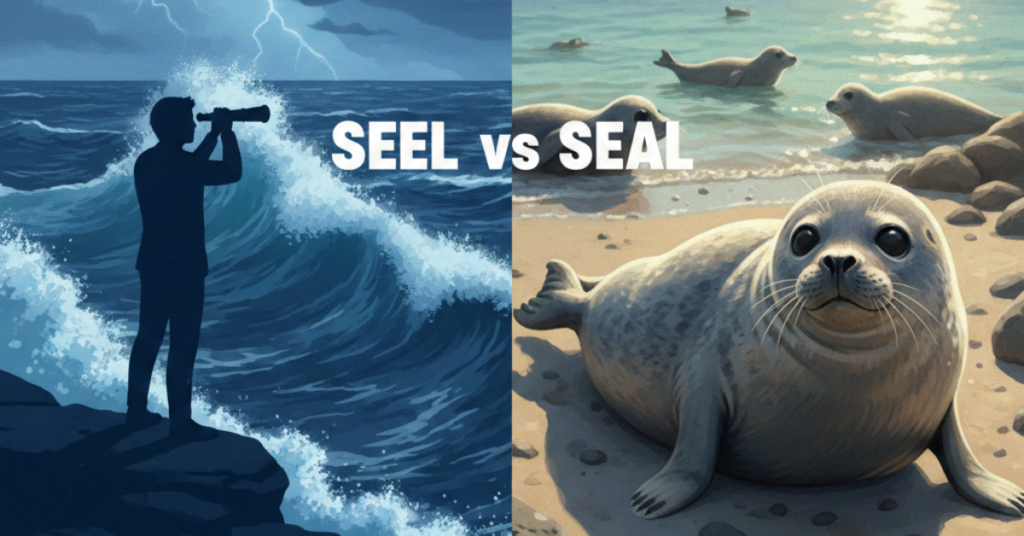

Ever typed a word and paused, wondering if it’s “seel” or “seal”? You’re not alone. The confusion around seel vs seal is surprisingly common, especially in writing where spellcheck doesn’t always catch rare words.
In this guide, we’ll break down the seel vs seal meaning, explore their definitions, and explain the real seel vs seal difference in a way that’s clear, practical, and easy to remember.
Let’s settle this once and for all.
Seel vs Seal Meaning: Are They the Same?
Short answer? No — they’re not the same.
While seal is a common English word with multiple meanings, seel is rare and mostly used in historical or specialized contexts.
Understanding the seel vs seal meaning starts with looking at each word individually.
What Does “Seal” Mean?
“Seal” is a versatile word in English. It can function as both a noun and a verb.
As a Verb:
To seal means:
-
To close something tightly
-
To secure or fasten
-
To finalize an agreement
Examples:
-
Please seal the envelope before mailing it.
-
The deal was sealed with a handshake.
-
Make sure the container is sealed properly.
As a Noun:
“Seal” can refer to:
-
A marine animal
-
A stamp or official mark
-
A device used to close something
Examples:
-
We saw a seal at the beach.
-
The document carries the official seal of approval.
Because of its broad usage, “seal” appears frequently in everyday English.
What Does “Seel” Mean?
Now here’s where things get interesting.
Seel meaning is much less common and mostly archaic. Historically, “seel” meant:
To close or stitch the eyes of a hawk or falcon.
Yes, really.
The term comes from falconry — an ancient hunting practice. In old texts, “seeling” was a method used to calm birds of prey.
Today, “seel” is rarely used in modern conversation or writing unless referring to historical or literary contexts.
Seel vs Seal Difference Explained Clearly
Let’s simplify the seel vs seal difference:
| Word | Meaning | Usage Today | Common? |
| Seal | Close, secure, marine animal, official stamp | Everyday language | Very common |
| Seel | Stitch shut (eyes of a hawk) | Historical/literary | Rare |
If you’re writing an email, essay, or social media post, you almost certainly mean seal, not seel.
Seel or Seal: How to Choose the Right One
When deciding between seel or seal, ask yourself:
-
Are you talking about closing something?
-
Are you referring to an agreement or approval?
-
Are you describing the animal?
If the answer is yes to any of these, the correct word is seal.
You would only use seel if:
-
You’re discussing falconry.
-
You’re quoting old literature.
-
You’re writing historical fiction.
Otherwise, it’s safe to assume seal is correct.
Why Do People Confuse Seel and Seal?
The confusion mainly happens because:
-
They sound identical (homophones).
-
Spellcheck sometimes doesn’t flag “seel.”
-
Typing errors happen quickly.
However, in 99% of real-world usage, seal vs seel isn’t actually a close contest — “seal” wins almost every time.
Common Mistakes in Seel vs Seal Usage
Here are examples of incorrect usage:
Please seel the package before shipping.
Please seal the package before shipping.
The contract was seel yesterday.
The contract was sealed yesterday.
Remember: If it’s modern English, you likely need seal.
Memory Trick to Remember the Difference
Here’s an easy trick:
-
Seal → Think “secure” (both start with S and relate to closing).
-
Seel → Think “rare” and “old.”
If you don’t mean something historical, choose seal.
FAQs About Seel vs Seal
What is the difference between seel and seal?
The main difference is that seal is a common word meaning to close or secure something, while seel is an archaic term related to falconry.
Is seel a real word?
Yes, seel meaning comes from historical English, but it’s rarely used today.
How do you use seal in a sentence?
Example: “Make sure you seal the envelope before sending it.”
Why doesn’t spellcheck correct seel?
Because “seel” is technically a valid word, even though it’s uncommon.
Which word should I use in business writing?
Always use seal, unless you’re discussing historical falconry.
Conclusion: Seel vs Seal — Know the Difference
Understanding seel vs seal is simpler than it first appears.
-
Seal is common, modern, and used daily.
-
Seel is rare, archaic, and specific to historical contexts.
-
The seel vs seal difference mainly comes down to relevance and time period.
If you’re writing for school, work, or online audiences, “seal” is almost certainly the word you need.
Language clarity builds credibility — especially if you’re working on improving your communication skills. Small distinctions like this help you write with more confidence and precision.