
Perfer or prefer is one of those spelling questions people Google every day—especially when writing emails, social posts, or academic work. It looks like it could go either way, and autocorrect doesn’t always save us. Let’s clear it up once and for all, without grammar jargon or boring explanations.
Clear Answer (No Guesswork)
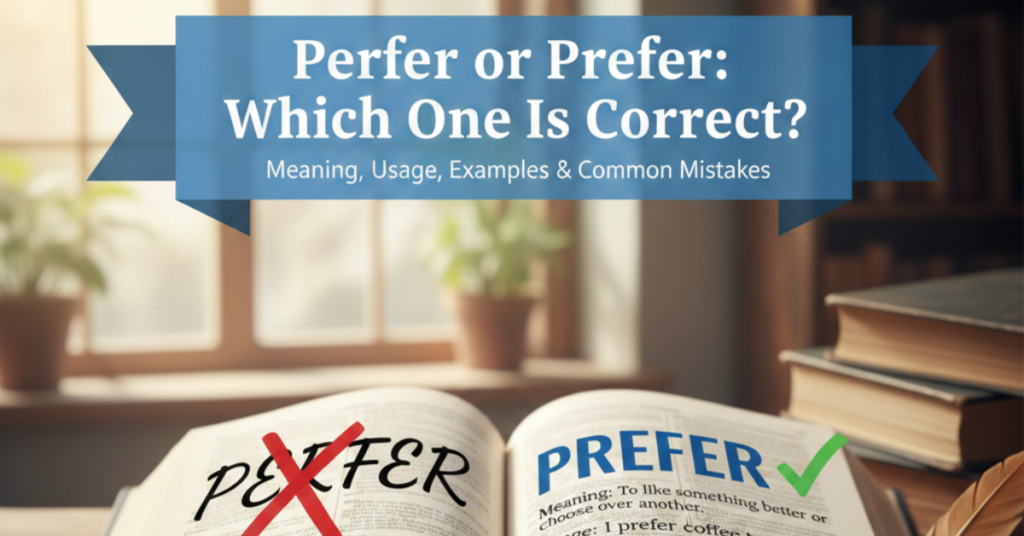
The correct word is prefer.
Perfer is not a standard English word and is considered a spelling error in modern English.
If you’re choosing between perfer or prefer, always go with prefer.
| Word | Correct? | Notes |
| Prefer | Yes | Standard English verb |
| Perfer | No | Common misspelling |
What Does “Prefer” Mean?
To prefer means:
To like, choose, or want one thing more than another.
It’s used when you’re expressing a choice, priority, or personal taste.
Simple definition:
-
Prefer = like something more than something else
Where Did “Prefer” Come From?
The word prefer comes from Latin:
-
prae = before
-
ferre = to carry or bring
So historically, prefer meant “to carry something before another”, which evolved into today’s meaning: choosing one thing over another.
That Latin root is why the spelling matters—and why perfer never existed as a correct alternative.
How “Prefer” Is Used in Real Life
Physical or Practical Choices
-
I prefer coffee over tea.
-
She prefers working in the morning.
-
We prefer the blue version of the product.
Metaphorical or Abstract Preferences
-
He prefers honesty to comfort.
-
Many people prefer quality over quantity.
-
They prefer freedom rather than control.
US vs UK Usage
Good news: there is no regional difference here.
-
American English: prefer
-
British English: prefer
-
Global English: prefer
The spelling and meaning are consistent worldwide.
Perfer is incorrect everywhere.
Common Mistakes People Make
Here’s why perfer keeps showing up online:
-
Sound-based spelling (“per-FER”)
-
Typing too fast
-
Assuming it follows patterns like transfer or refer
-
Non-native English influence
-
Autocorrect not catching it
Incorrect vs Correct Examples
| Incorrect Sentence | Correct Sentence |
| I perfer pizza. | I prefer pizza. |
| Do you perfer email? | Do you prefer email? |
| She perfered silence. | She preferred silence. |
Real-Life Examples You’ll Recognize
Social Media
-
“I prefer dark mode—who’s with me?”
Workplace Email
-
“Please let me know if you prefer a call or email.”
Training or Learning
-
“Some learners prefer visual content, others prefer text.”
Everyday Conversation
-
“I’d prefer to stay in tonight.”
Usage Trends: Why This Question Is So Popular
Search data shows that “perfer or prefer” is commonly searched by:
-
ESL learners
-
Students
-
Professionals writing formal emails
-
Social media users
-
Bloggers and content creators
Why the confusion persists:
-
Spoken English hides spelling errors
-
“Perfer” sounds logical
-
English spelling isn’t always intuitive
Frequently Asked Questions (FAQ)
1. Is “perfer” ever a real word?
No. Perfer has never been a correct English word in standard usage.
2. Why do so many people spell prefer as perfer?
Because English pronunciation doesn’t clearly signal the correct spelling, and people rely on sound.
3. What’s the past tense of prefer?
Preferred
Example: She preferred tea yesterday.
4. Can prefer be used without “than”?
Yes.
-
I prefer coffee.
-
I prefer coffee to tea.
5. Is prefer formal or informal?
Both. It works in casual speech, professional writing, and academic contexts.
6. Does autocorrect always fix “perfer”?
Not always—especially in fast typing or mobile devices.
7. What’s an easy way to remember the correct spelling?
Think “pre + fer” → prefer
There’s no extra “r” after the e.
Final Takeaway
Perfer or prefer may seem like a small spelling issue, but using the correct word matters for clarity, professionalism, and confidence in writing. Prefer is the only correct form—simple, universal, and widely understood. Once you lock it in, you’ll never second-guess it again.
Remember this: if you’re choosing between perfer or prefer, prefer is always the right choice.