
Blankie or blanky is one of those deceptively simple questions that sends people down a spelling rabbit hole. Parents want to write it “correctly.” Adults feel oddly attached to the word. And the internet can’t seem to agree which version is right. If you’ve ever paused mid-text, caption, or baby book wondering “Is it blankie or blanky?”—you’re very much not alone.
Let’s settle it clearly, calmly, and with real-world context.
The Clear Answer (No Guessing Required)
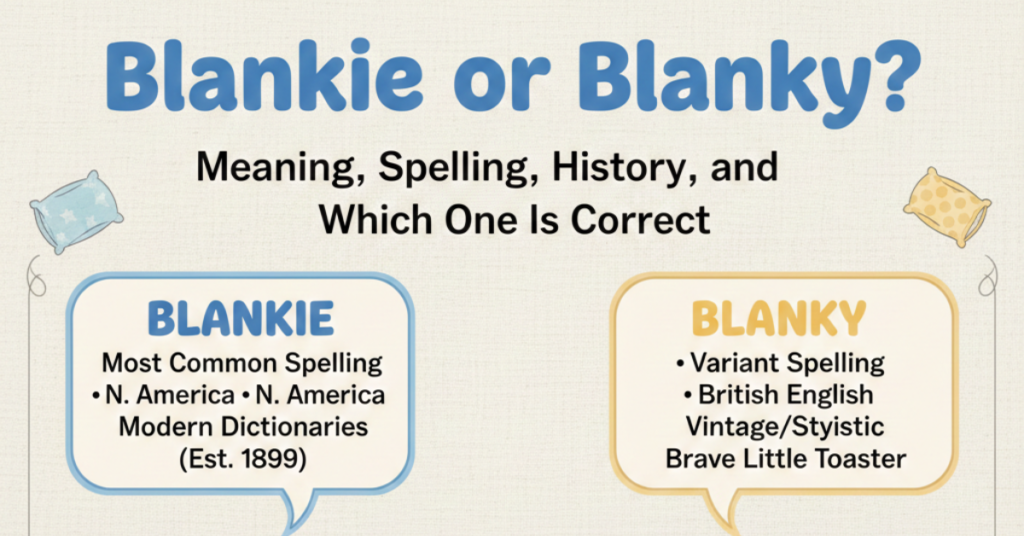
Blankie is the most widely accepted and commonly used spelling.
Blanky is an alternate spelling, but it’s far less common and usually considered informal or nonstandard.
If you’re choosing one for:
-
writing,
-
SEO,
-
parenting content,
-
books,
-
or anything public-facing…
Blankie is the safer and more recognizable choice.
What Does “Blankie” (or “Blanky”) Mean?
A blankie is:
-
A small blanket, typically associated with babies or young children
-
Often a comfort object that provides emotional security
-
Sometimes carried everywhere, slept with nightly, and fiercely protected
Over time, the word has expanded beyond literal blankets to include emotional meaning (more on that below).
Where Did “Blankie” Come From?
The word blankie comes from:
-
Blanket (root word)
-
Plus the diminutive -ie ending, commonly used in child-directed speech
Examples of similar patterns:
-
Dog → doggie
-
Bear → bearie
-
Sleep → sleepie
This kind of language is called hypocoristic speech—softened words used to express affection, especially with children.
Blanky, on the other hand, likely emerged from:
-
Phonetic spelling
-
Informal writing
-
Personal preference rather than linguistic convention
How “Blankie” Is Used Today (Literal + Metaphorical)
Physical Usage
Most commonly refers to:
-
A child’s favorite blanket
-
A sleep aid
-
A transitional object during early development
Example:
“She won’t fall asleep without her blankie.”
Metaphorical Usage
Among adults, blankie has evolved into a metaphor for emotional comfort.
Examples:
-
“That hoodie is basically my emotional blankie.”
-
“Scrolling TikTok before bed is my digital blankie.”
Here, blankie means anything that brings reassurance, safety, or calm.
Regional & Cultural Usage
| Region | Preferred Spelling | Notes |
| United States | Blankie | Dominant in parenting, media, and publishing |
| United Kingdom | Blankie | Used, but less common overall |
| Global English | Blankie | Recognized internationally |
| Informal/Personal Use | Blanky | Seen in texts, usernames, casual notes |
Bottom line: Blankie wins globally.
Common Mistakes People Make
Here’s where people often trip up:
-
Assuming blanky is the “cuter” or more correct version
-
Mixing spellings in the same article or post
-
Using blanky in professional or SEO-focused content
-
Thinking one spelling changes the meaning (it doesn’t)
Tip: Pick one spelling and stay consistent. Preferably blankie.
Real-Life Examples You’ll Actually See
Parenting & Family
-
“Don’t forget Leo’s blankie for daycare.”
-
“She’s attached to that blankie like glue.”
Social Media
-
“My dog stole my blankie ”
-
“Adulting is just replacing a blankie with coffee.”
Everyday Conversation
-
“I need my comfort shows—total blankie energy.”
Search & Usage Trends
Here’s how the two spellings stack up in real-world usage:
| Term | Relative Popularity | Usage Context |
| Blankie | ⭐⭐⭐⭐⭐ | Parenting blogs, books, SEO content |
| Blanky | ⭐⭐ | Casual writing, usernames, personal notes |
Search behavior strongly favors blankie, especially in educational and parenting-related searches.
FAQ: People Also Ask About “Blankie or Blanky”
1. Is blankie a real word?
Yes. It’s widely recognized in dictionaries and common usage.
2. Is blanky incorrect?
Not exactly—it’s informal and less accepted, but still understood.
3. Which spelling should parents use?
Blankie, especially in writing, labels, or keepsakes.
4. Can adults say “blankie”?
Absolutely. Language evolves, and adults use it metaphorically all the time.
5. Is one spelling better for SEO?
Yes—blankie performs better in search visibility and clarity.
6. Why does this spelling debate exist at all?
Because child-language words often evolve organically and aren’t tightly standardized at first.
Final Thoughts: Which One Should You Choose?
Blankie or blanky may look like a tiny spelling choice, but it carries clarity, tone, and even emotional weight. Blankie is the dominant, trusted, and widely understood form—perfect for writing, search optimization, and everyday use. Blanky can still live happily in casual texts or personal nicknames, but when in doubt, go with the version everyone recognizes.
Memorable takeaway:
If comfort had a correct spelling, it would be blankie—soft, familiar, and universally understood.