
If you’ve ever been texting or chatting online and someone typed “ASL?”, you might have paused, wondering what on earth they meant. Don’t worry—you’re not alone. In today’s digital world, abbreviations and slang are everywhere, and “ASL” meaning in text is one of the most common ones. Understanding it can help you communicate better and avoid awkward misunderstandings.
At its core, ASL in text messages is all about introducing yourself in a quick, casual way—but there’s more nuance to it. Let’s dive in.
What Does ASL Mean in Text?
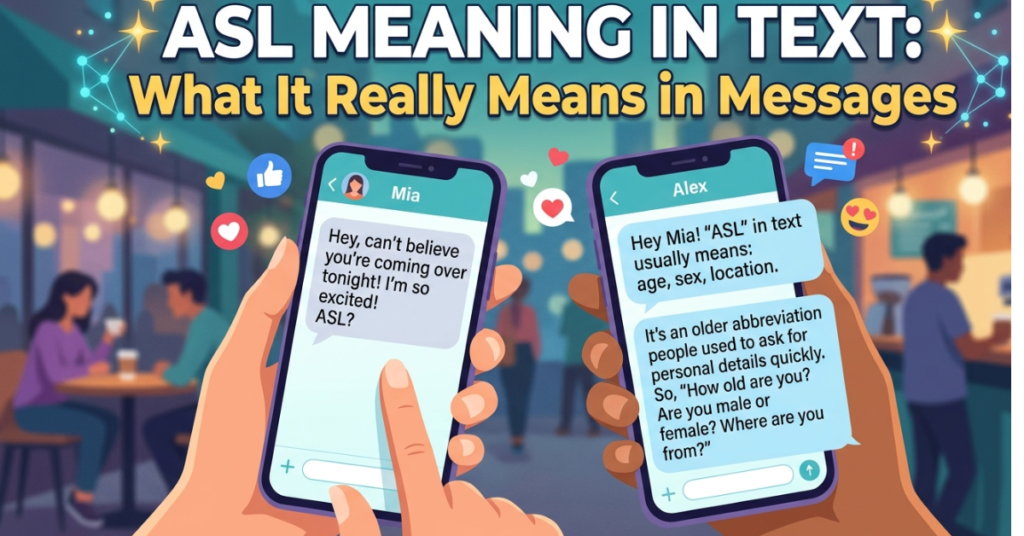
In online conversations, ASL stands for:
-
Age
-
Sex
-
Location
Essentially, when someone asks “ASL?”, they’re politely trying to get basic information about you: how old you are, your gender, and where you’re from.
This shorthand became popular in chat rooms, instant messaging platforms, and early online communities. Its simplicity made it easy for strangers to start conversations without long explanations.
ASL Meaning in Text Slang
While ASL originally stood for Age, Sex, and Location, it has taken on slightly different meanings depending on context. In text slang, ASL might also be used:
-
In casual online chats to quickly meet new people
-
On social media to filter matches or friends
-
On dating apps where initial introductions are brief
However, keep in mind that in modern messaging, some users consider ASL outdated or intrusive, as privacy awareness has increased.
How to Use ASL in a Text Message
If you’re wondering how to respond when someone asks “ASL?” in a message, here are some tips:
-
Be cautious with personal info: Share only what you’re comfortable revealing.
-
Keep it short: Typical response format is something like:
-
25/F/New York -
30/M/California
-
-
Use humor if appropriate: Some people reply jokingly if they don’t want to share details.
This makes ASL meaning in text messages both a practical and flexible way to start a conversation.
Why People Still Use ASL Online
Despite its age, ASL persists in certain online spaces. Here’s why:
-
Quick communication: Saves time in fast-paced chats
-
Icebreaker tool: Offers a simple way to start conversations
-
Cultural nostalgia: Older internet users grew up with it in chat rooms
Even though many modern platforms now include profiles with built-in info, ASL remains a recognizable shorthand for many internet users.
Alternatives to ASL in Modern Messaging
If you feel ASL is outdated or too personal, there are newer ways to ask about someone online:
-
“How old are you?” more direct and polite
-
“Where are you from?” location only
-
Social media bios age, gender, and location often visible
These alternatives respect privacy while still allowing people to get basic info.
FAQs About ASL in Text
Q1: Is ASL safe to use online?
A1: Yes, but only if you’re careful. Avoid sharing details with strangers if you’re not comfortable.
Q2: Does ASL only mean Age, Sex, Location?
A2: In text slang, yes, but context can slightly change its meaning depending on the conversation.
Q3: Where did ASL originate?
A3: ASL became popular in early internet chat rooms and instant messaging platforms in the 1990s.
Q4: Can ASL be considered rude?
A4: Some people find it intrusive because it asks personal info right away, so it depends on the context.
Conclusion
Understanding ASL meaning in text is a small but essential part of navigating online conversations. Whether you’re chatting in forums, using messaging apps, or meeting people on social media, knowing what ASL stands for—and how to use it safely—can make your interactions smoother and more enjoyable.
Next time you see “ASL?”, you’ll know exactly how to respond, keeping your online conversations clear, fun, and secure.