
If you’ve ever typed “plack vs plaque” into a search bar, you’re not alone. Many people get confused by these two words because they sound almost identical when spoken. However, only one of them is actually correct in most situations.
Understanding the difference between plack vs plaque is important, especially when you’re talking about dental health, medical conditions, or awards and commemorative plates. In this guide, we’ll break down what each word means, why people mix them up, and how to use the correct spelling confidently.
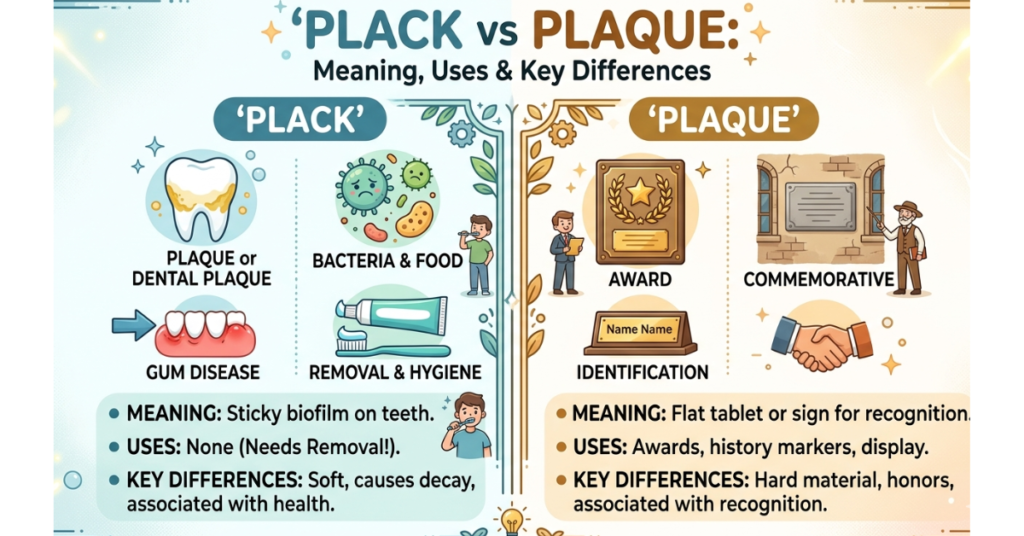
Plack vs Plaque: Quick Overview
| Word | Is It Correct? | Meaning | Common Usage |
| Plack | Usually incorrect | A misspelling of “plaque” | Rarely used |
| Plaque | Correct spelling | A sticky film on teeth, a deposit in arteries, or a commemorative plate | Dental, medical, and awards |
Bottom line: In the plack vs plaque debate, plaque is the correct and widely accepted spelling.
What Does Plaque Mean?
The word plaque has a few different meanings depending on the context. Despite the different uses, they all relate to some form of layer, buildup, or flat plate.
1. Dental Plaque
The most common use of the word is in dentistry.
Dental plaque is a sticky, colorless film of bacteria that constantly forms on teeth.
If plaque isn’t removed, it can lead to:
-
Cavities
-
Gum disease
-
Bad breath
-
Tartar buildup
Example sentence:
“Brushing twice a day helps remove plaque from your teeth.”
2. Medical Plaque Arterial Plaque
In medicine, plaque can also refer to fatty deposits that build up inside arteries.
This type of plaque may contain:
-
Cholesterol
-
Fat
-
Calcium
-
Cellular waste
Over time, it can lead to atherosclerosis, increasing the risk of heart attack or stroke.
Example:
“Arterial plaque buildup can restrict blood flow.”
3. Commemorative Plaque
Another common meaning of plaque is a decorative plate used to commemorate an event, person, or achievement.
You’ll often see these on:
-
Historical buildings
-
Awards and trophies
-
Memorials
Example:
“The school installed a plaque honoring its founder.”
What Does “Plack” Mean?
When discussing plack vs plaque, it’s important to know that “plack” is generally not a correct English word.
In most cases, plack is simply a misspelling of plaque.
People often write plack because:
-
The pronunciation sounds similar
-
Autocorrect doesn’t always catch it
-
English spelling rules can be confusing
If you’re writing about teeth, awards, or medical conditions, you almost certainly want plaque, not plack.
Why People Confuse Plack vs Plaque
English is full of tricky spellings, and plack vs plaque is a perfect example.
Here are a few reasons the confusion happens:
1. Similar Pronunciation
Both words sound like “plak.”
2. French Origin
The word plaque comes from French, which explains the unusual spelling.
3. Autocorrect Errors
Sometimes typing quickly leads to plack, and spellcheck may miss it depending on the software.
How to Remember the Correct Spelling
A simple trick can help you avoid mixing up plack vs plaque.
Memory Tip
Think of the “que” at the end of plaque as standing for “quality English spelling.”
Another way to remember:
-
Plaque = Proper word
-
Plack = Typo
Examples of Plaque in Sentences
Here are a few examples showing how the correct word is used:
-
“Dentists recommend flossing daily to remove plaque.”
-
“The museum placed a bronze plaque next to the statue.”
-
“Doctors monitor arterial plaque to assess heart disease risk.”
Notice how plaque works in dental, medical, and historical contexts.
Dental Plaque: Why It Matters
Since plaque is most often discussed in dentistry, it’s worth understanding why it matters.
When plaque builds up, bacteria produce acids that attack tooth enamel.
Over time, this can lead to:
-
Tooth decay
-
Gingivitis
-
Periodontitis
-
Tooth loss
How to Prevent Plaque Buildup
Dentists usually recommend:
-
Brushing twice daily with fluoride toothpaste
-
Flossing once per day
-
Using antibacterial mouthwash
-
Visiting a dentist every six months
These habits help keep plaque from turning into tartar, which is much harder to remove.
Plaque vs Tartar: What’s the Difference?
People also confuse plaque with tartar.
| Feature | Plaque | Tartar |
| Texture | Sticky film | Hardened deposit |
| Removal | Brushing & flossing | Professional dental cleaning |
| Color | Usually colorless | Yellow or brown |
Plaque forms first. If it isn’t cleaned away, it hardens into tartar.
FAQs About Plack vs Plaque
Is “plack” a real word?
In modern English, plack is usually considered a misspelling of plaque. The correct word is plaque in dental, medical, and award contexts.
How do you pronounce plaque?
Plaque is pronounced “plak.”
What causes dental plaque?
Dental plaque forms when bacteria mix with food particles and saliva, creating a sticky layer on teeth.
Can plaque be removed at home?
Yes. Plaque can be removed with:
-
Regular brushing
-
Flossing
-
Mouthwash
However, once it becomes tartar, a dentist must remove it.
Why is plaque harmful to teeth?
Plaque contains bacteria that produce acid, which can erode enamel and cause cavities and gum disease.
Conclusion
When comparing plack vs plaque, the answer is simple: plaque is the correct word, while plack is typically just a spelling mistake.
Plaque can refer to several things—from the sticky film that forms on teeth to fatty deposits in arteries or commemorative plates on buildings. Because the word has multiple meanings, it’s widely used in dental, medical, and historical contexts.
If you remember one thing, remember this: when in doubt, use “plaque.”
Keeping the correct spelling in mind not only improves your writing but also helps avoid confusion—especially when discussing important topics like dental health.