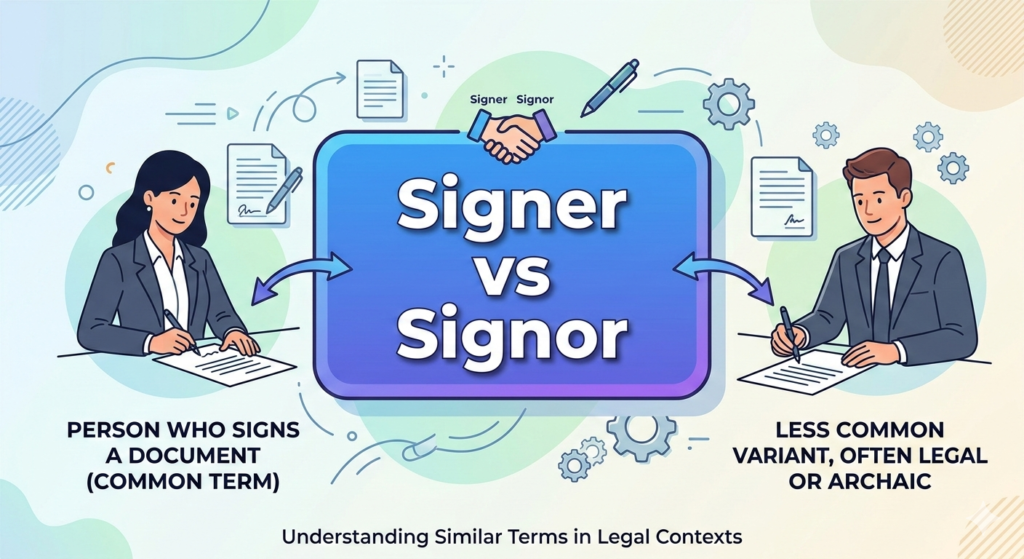

Language can be tricky, especially when two words look almost identical but carry completely different meanings. One common example is Signer vs Signor. At first glance, they appear nearly the same, but they belong to different linguistic contexts and are used in very different situations.
If you’ve ever wondered signer or signor—which one is correct? you’re not alone. These terms often confuse writers, students, and even professionals dealing with legal or international communication.
In this guide, we’ll break down the Signer vs Signor debate in a simple, conversational way. By the end, you’ll clearly understand their meanings, origins, and when to use each one correctly.
What Does “Signer” Mean?
The word signer is an English noun that refers to a person who signs a document, agreement, or contract.
In simple terms, a signer is someone who places their signature on an official paper to confirm approval, agreement, or authorization.
Common Contexts Where “Signer” Is Used
You’ll often see the word signer in legal, financial, and administrative documents.
Examples include:
-
Contract agreements
-
Legal documents
-
Bank authorization forms
-
Petitions
-
Digital signatures
Example Sentences
-
Each signer must provide identification before signing the contract.
-
The document requires two witnesses and one primary signer.
-
Every signer agreed to the terms of the partnership.
Key Characteristics of a Signer
A signer typically:
-
Confirms agreement through a signature
-
Takes responsibility for the signed document
-
May be legally bound by the document
In short, a signer plays a formal role in validating paperwork.
What Does “Signor” Mean?
Unlike signer, the word Signor comes from the Italian language. It is a polite title used before a man’s name, similar to “Mr.” in English.
So when discussing Signer vs Signor, remember that Signor is a title, not an action or role.
Examples of “Signor” in Use
-
Signor Rossi will attend the meeting tomorrow.
-
Good evening, Signor Bianchi.
-
Thank you for your hospitality, Signor Ferrari.
Origin of the Word
The term comes from the Italian word “Signore,” which means lord, gentleman, or sir.
Related forms include:
-
Signora – Mrs. (married woman)
-
Signorina – Miss (young unmarried woman)
Where You’ll Encounter “Signor”
You’ll usually see Signor in:
-
Italian culture and language
-
Historical texts
-
Formal Italian correspondence
-
Travel or cultural writing
Signer vs Signor: The Key Differences
Understanding Signer vs Signor becomes much easier when you compare them side by side.
| Feature | Signer | Signor |
| Language | English | Italian |
| Meaning | Person who signs a document | Formal title meaning “Mr.” |
| Usage | Legal or official documents | Addressing a man in Italian |
| Example | Contract signer | Signor Rossi |
Quick Rule to Remember
-
If someone signs a document → signer
-
If you’re addressing an Italian man → Signor
This simple trick prevents most confusion between signer or signor.
Why People Confuse Signer or Signor
There are a few reasons why signer or signor is often mixed up.
1. Similar Spelling
The two words differ by just one letter, which makes them easy to mistype.
2. Pronunciation Similarities
Depending on accents, they can sound somewhat alike in conversation.
3. Autocorrect Errors
Some writing tools may mistakenly replace one word with the other.
4. Lack of Context
Without context, readers may struggle to determine whether the writer meant signer or Signor.
When to Use “Signer” Correctly
Use signer when referring to someone who signs a document.
Common Professional Situations
You’ll encounter signer in areas such as:
-
Business contracts
-
Legal agreements
-
Government forms
-
Digital authentication
Example:
The primary signer must complete all fields before submission.
When to Use “Signor” Correctly
Use Signor when addressing an Italian man respectfully.
Cultural and Language Contexts
Examples include:
-
Italian letters
-
Formal greetings
-
Travel situations in Italy
-
Italian literature
Example:
Welcome to our restaurant, Signor Romano.
Common Writing Mistakes to Avoid
Here are some mistakes people make when discussing Signer vs Signor.
Incorrect Usage Examples
The Signor of the contract must provide identification.
The signer of the contract must provide identification.
Please welcome signer Antonio.
Please welcome Signor Antonio.
Keeping the meaning clear helps avoid awkward or incorrect wording.
Tips for Remembering the Difference
Here are a few quick tricks to keep Signer vs Signor straight:
Think of “Signer” as:
-
Sign
-
Signature
-
Signing documents
Think of “Signor” as:
-
Italy
-
Italian titles
-
Formal address for men
A helpful memory trick:
Signer signs. Signor is a sir.
FAQs About Signer vs Signor
1. What is the difference between Signer vs Signor?
The difference is simple: a signer is someone who signs a document, while Signor is an Italian title meaning “Mr.”
2. Which is correct: signer or signor?
Both are correct but used in different contexts. Use signer for documents and Signor when addressing an Italian man.
3. Is Signor used in English?
Yes, but mainly when referring to Italian names or culture, such as Signor Rossi.
4. Can signer be used as a job title?
Not typically as a job title, but it describes a role—someone responsible for signing a document or agreement.
5. Is Signor capitalized?
Yes. Signor is usually capitalized because it functions as a formal title before a name.
Conclusion
Understanding the difference between Signer vs Signor is easier once you know their origins and meanings. A signer is simply someone who signs a document, often in legal or official contexts. On the other hand, Signor is a respectful Italian title equivalent to “Mr.”
While they look similar, their uses are completely different. Remember: signer relates to signatures, while Signor relates to Italian titles.
If you’re writing professionally or learning language nuances, mastering small distinctions like signer or signor can make your communication clearer and more precise.