
English is full of words that look almost identical but mean completely different things. “Vicious vs viscous” is a classic example. At first glance, they appear nearly the same—only one letter separates them—but their meanings couldn’t be more different.
Understanding the difference between vicious vs viscous can help you avoid embarrassing mistakes in writing and conversation. One word describes aggressive or cruel behavior, while the other refers to thick, sticky liquids. In this guide, we’ll break down the meanings, examples, and easy tricks to remember the difference.
What Does “Vicious” Mean?
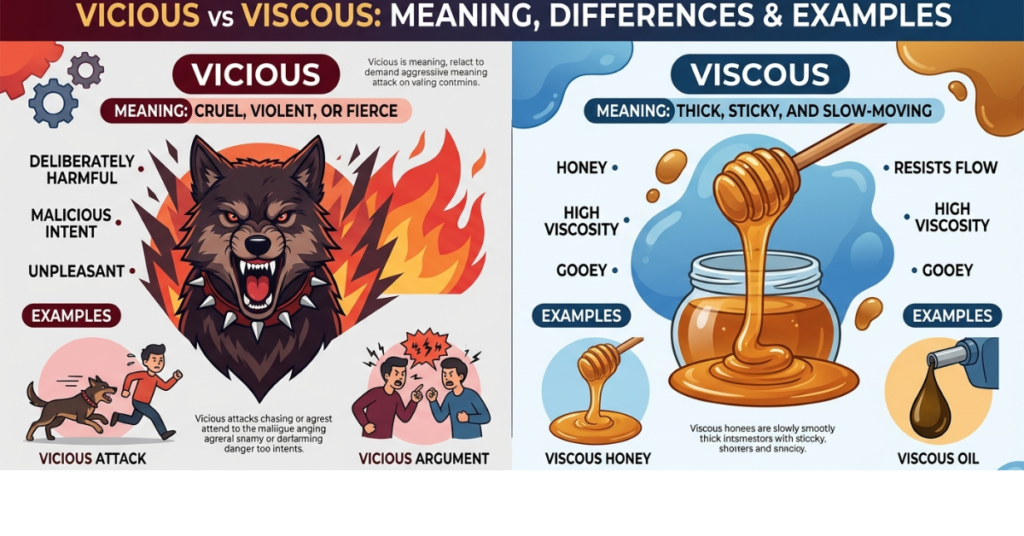
The word vicious is used to describe someone or something that is violent, aggressive, cruel, or intentionally harmful.
It often appears when talking about attacks, criticism, behavior, or animals that act with hostility.
Common Meanings of Vicious
-
Extremely violent or aggressive
-
Cruel or malicious
-
Severe or intense (like a vicious storm)
-
Harmful habits or cycles
Examples of “Vicious” in Sentences
-
The dog became vicious when strangers approached the gate.
-
The politician faced vicious criticism from the media.
-
A vicious storm destroyed several homes along the coast.
-
She was caught in a vicious cycle of debt.
Synonyms for Vicious
Some similar words include:
-
Brutal
-
Violent
-
Savage
-
Cruel
-
Malicious
Memory Tip:
Think of vicious = violence. Both start with “vi.”
What Does “Viscous” Mean?
The word viscous has a completely different meaning. It refers to a thick, sticky liquid that flows slowly.
This term is commonly used in science, cooking, and engineering when describing the consistency of fluids.
Characteristics of Viscous Liquids
A viscous liquid typically:
-
Flows slowly
-
Is thick or sticky
-
Has high resistance to flow
Examples of Viscous Substances
Some everyday viscous liquids include:
-
Honey
-
Syrup
-
Motor oil
-
Molasses
-
Lava
Examples of “Viscous” in Sentences
-
Honey is more viscous than water.
-
The engine requires viscous oil for proper lubrication.
-
The lava moved slowly because it was highly viscous.
Synonyms for Viscous
-
Thick
-
Sticky
-
Gooey
-
Gel-like
-
Syrupy
Memory Tip:
Viscous = viscosity, which is a scientific term for liquid thickness.
Vicious vs Viscous: Key Differences
Here’s a simple comparison to make things crystal clear.
| Feature | Vicious | Viscous |
| Meaning | Aggressive, cruel, or violent | Thick liquid that flows slowly |
| Usage | Describes behavior or actions | Describes liquids |
| Field | Everyday language, psychology | Science, physics, cooking |
| Example | A vicious dog | Viscous honey |
Simple rule:
-
Vicious → behavior or attitude
-
Viscous → liquid thickness
Why People Confuse Vicious and Viscous
The confusion between vicious vs viscous happens mainly because:
-
They look almost identical in spelling.
-
They sound similar when spoken quickly.
-
Both are relatively uncommon words.
However, their meanings come from completely different origins.
-
Vicious comes from the Latin vitiosus, meaning faulty or immoral.
-
Viscous comes from viscum, meaning sticky substance.
Easy Trick to Remember the Difference
Here are two quick tricks to keep them straight:
Trick #1: The Violence Trick
-
Vicious = Violence
-
Both relate to aggression or harm.
Trick #2: The Liquid Trick
-
Viscous = Viscosity
-
Viscosity measures how thick a liquid is.
Once you remember these associations, the difference becomes obvious.
Common Mistakes to Avoid
People often accidentally swap these words in writing.
Incorrect:
The lava was vicious and moved slowly down the volcano.
Correct:
The lava was viscous and moved slowly down the volcano.
Incorrect:
The criminal launched a viscous attack.
Correct:
The criminal launched a vicious attack.
Even small spelling differences can completely change the meaning of a sentence.
FAQs About Vicious vs Viscous
1. What is the difference between vicious and viscous?
The difference between vicious vs viscous is simple. Vicious describes something violent, cruel, or aggressive, while viscous describes a thick liquid that flows slowly.
2. Is honey viscous or vicious?
Honey is viscous because it is thick and flows slowly.
3. Can a person be viscous?
No. Viscous describes liquids only. A person can be vicious, but not viscous.
4. Why do people mix up vicious and viscous?
People confuse them because the words look and sound similar, but they have completely different meanings.
5. What is an example of a viscous liquid?
Examples of viscous liquids include:
-
Honey
-
Syrup
-
Motor oil
-
Molasses
Conclusion
Understanding vicious vs viscous is easier than it first appears. The key difference lies in what the words describe. Vicious refers to cruel, aggressive, or violent behavior, while viscous refers to thick liquids that flow slowly.
A simple memory trick can help: vicious relates to violence, while viscous relates to viscosity. Once you remember this connection, you’ll never confuse the two again.
If you’re writing professionally, learning the difference between commonly confused words like this can significantly improve your clarity and credibility.