
Words that look or sound similar can easily cause confusion, especially in English. One pair that often puzzles writers is resinate vs resonate. At first glance, they appear closely related, but their meanings and usage are completely different.
Understanding resinate vs resonate is important for clear communication, whether you’re writing an essay, blog post, or professional email. In this guide, we’ll break down the definitions, differences, examples, and common mistakes so you can use each word confidently.
What Does “Resonate” Mean?
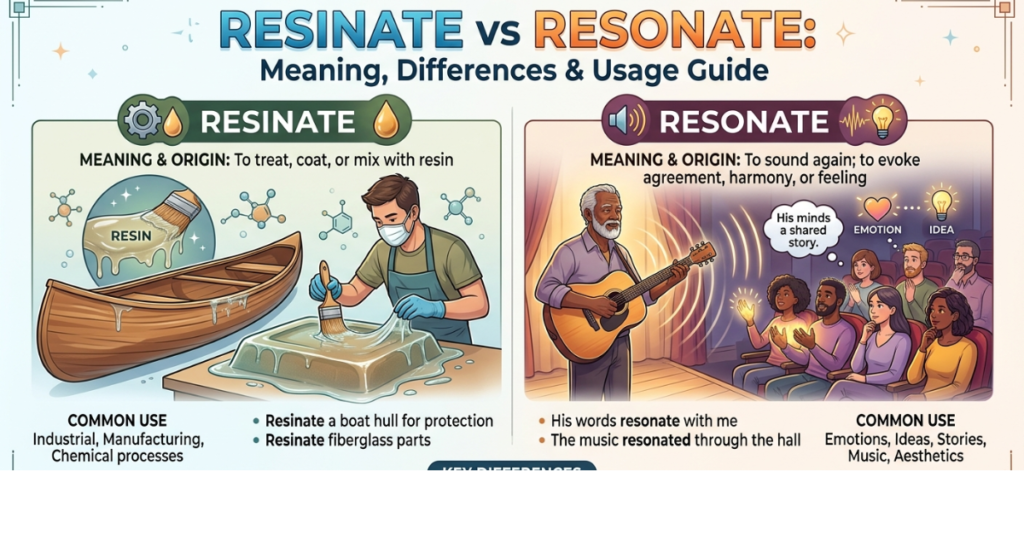
Resonate is a commonly used verb that means to produce sound vibrations, evoke emotion, or strongly connect with someone’s feelings or ideas.
The word is widely used in both literal and figurative contexts.
Common Meanings of Resonate
-
To produce or amplify sound
-
To evoke strong emotions or memories
-
To strongly connect with someone
Examples of Resonate in a Sentence
-
The singer’s voice resonated through the concert hall.
-
Her story resonated with many people who faced similar struggles.
-
The message of the film resonates deeply with audiences worldwide.
In modern communication—especially marketing, storytelling, and speeches—the phrase “resonate with your audience” is extremely common.
What Does “Resinate” Mean?
Unlike resonate, the word resinate is rare and mostly used in scientific or botanical contexts.
Resinate means to contain or produce resin, a sticky organic substance found in many plants and trees.
Examples of Resinate in a Sentence
-
Some plants have resinate glands that produce natural resin.
-
The leaves of the plant appear slightly resinate when crushed.
Because it is a technical term, you will rarely encounter it in everyday conversation or general writing.
Key Differences Between Resinate vs Resonate
Here’s a quick comparison to clarify the distinction.
| Feature | Resinate | Resonate |
| Meaning | Contains or produces resin | Produces sound or evokes emotion |
| Usage Frequency | Very rare | Very common |
| Context | Scientific, botanical | Communication, music, emotions |
| Part of Speech | Adjective / verb (rare) | Verb |
| Example | Resinate plant glands | The speech resonated with the audience |
In simple terms:
-
Resonate = emotional or sound connection
-
Resinate = related to resin in plants
Why People Confuse Resinate vs Resonate
The confusion between resinate vs resonate usually happens because:
-
The words look very similar
-
They share the same first six letters (reson- / resin-)
-
Spellcheck sometimes overlooks them in certain contexts
However, their meanings come from different linguistic roots.
Word Origins
-
Resonate comes from the Latin resonare, meaning to sound again or echo.
-
Resinate comes from resin, referring to plant secretions.
Knowing this origin makes the difference much easier to remember.
How to Remember the Difference
A simple trick can help you keep resinate vs resonate straight.
Memory Tip
-
ResONate → relates to sONd or emOtiON
-
ResINate → relates to resIN
This quick association makes it easier to choose the correct word while writing.
When Should You Use “Resonate”?
Use resonate when discussing:
-
Emotional connections
-
Sound vibrations
-
Ideas that strongly impact people
Common Phrases
-
Resonate with the audience
-
Resonate deeply
-
Resonate emotionally
-
Resonate across cultures
These phrases are widely used in marketing, storytelling, speeches, and psychology.
When Should You Use “Resinate”?
Use resinate only in specialized contexts, such as:
-
Botany
-
Plant biology
-
Chemistry
Examples include:
-
Resinate glands
-
Resinate plant surfaces
-
Resinate substances
For everyday writing, it’s unlikely you’ll need this word.
Common Mistakes to Avoid
Here are mistakes writers often make when mixing up resinate vs resonate.
1. Using Resinate Instead of Resonate
Incorrect:
-
This message resinated with readers.
Correct:
-
This message resonated with readers.
2. Assuming Resinate Is a Typo
Sometimes writers think resinate is simply a misspelling of resonate, but technically it is a real word—just rarely used.
Why “Resonate” Is So Popular in Modern Writing
The word resonate appears frequently in:
-
Marketing copy
-
Public speaking
-
Personal development
-
Content writing
That’s because it perfectly describes ideas that emotionally connect with people.
For example:
-
A brand message that resonates with customers
-
A story that resonates across cultures
This emotional connection is exactly what great communication aims to achieve.
Frequently Asked Questions (FAQs)
Is “resinate” a real word?
Yes, resinate is a real word, but it’s extremely rare and mostly used in scientific or botanical discussions.
What does resonate mean in simple terms?
Resonate means to strongly connect with someone emotionally or intellectually, or to produce sound vibrations.
Can resinate be used instead of resonate?
No. Even though the words look similar, they have completely different meanings.
Why do people search for “resinate vs resonate”?
Many people encounter resinate as a typo or unfamiliar word, which leads them to compare it with the more common word resonate.
Which word is used more often?
Resonate is far more common and widely used in everyday writing and speech.
Conclusion
The difference between resinate vs resonate is simple once you understand their meanings.
-
Resonate refers to sound, emotional impact, or meaningful connection.
-
Resinate refers to substances that contain or produce resin, mainly in scientific contexts.
For most writers, resonate will be the correct word nearly every time. Knowing this distinction not only improves your vocabulary but also ensures your writing stays clear and professional.
If you’re aiming to write content that truly resonates with your audience, choosing the right words makes all the difference.