
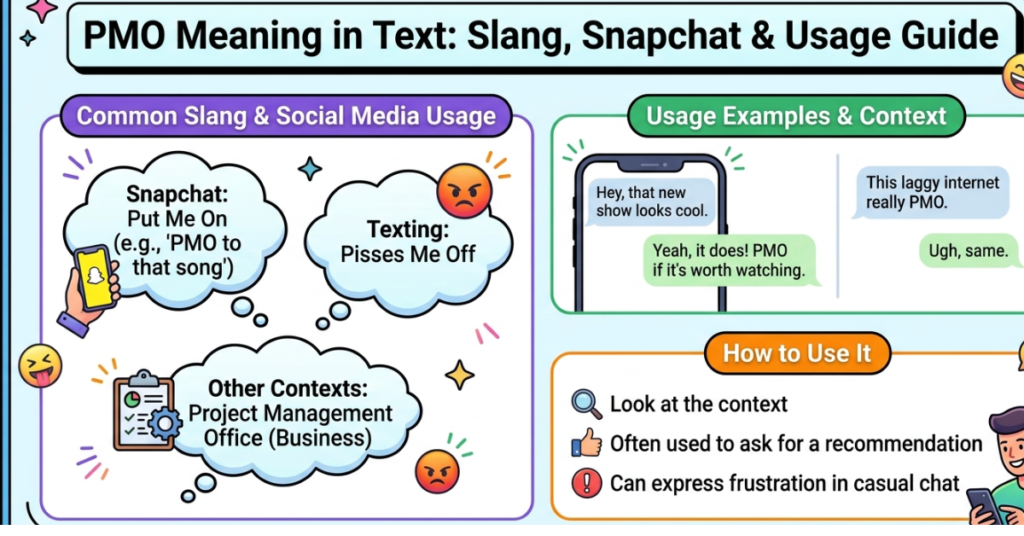

If you’ve ever seen someone type “PMO” in a text message or on Snapchat, you’re not alone in wondering what it means. The phrase has become increasingly popular in online conversations, especially among younger users and on social media platforms. Understanding the PMO meaning in text can help you keep up with modern slang and avoid confusion in chats.
In this guide, we’ll break down what PMO means, how it’s used in texting and Snapchat, and when you should (or shouldn’t) use it.
What Does PMO Mean in Text?
The PMO meaning in text usually stands for:
“Put Me On”
It’s a casual slang phrase used when someone wants a recommendation, introduction, or hookup (not in a romantic sense, but more like access).
Example:
-
“That song is fire, PMO more like that!”
→ (Meaning: Recommend me more songs like that) -
“PMO to a good Netflix show.”
→ (Meaning: Suggest a good show for me)
PMO Meaning in Text Slang
In slang terms, PMO is all about asking for connections, suggestions, or insider info. It’s commonly used in informal conversations, especially among friends.
Common Slang Uses:
-
Asking for music recommendations
-
Discovering new brands or trends
-
Finding good places (restaurants, cafes, etc.)
-
Getting introduced to opportunities
Other Possible Meanings
While “Put Me On” is the most popular meaning, PMO can occasionally have different interpretations depending on context:
-
“Pisses Me Off” (less common, but still used)
-
Example: “This lag is PMO”
-
-
“Private Message Only” (rare in texting)
Context is everything—always read the conversation carefully.
PMO Meaning in Text Snapchat
On Snapchat, the PMO meaning text Snapchat usage is almost always “Put Me On.”
Snapchat is heavily driven by trends, so users often say things like:
-
“PMO to your skincare routine”
-
“PMO to your playlist”
-
“PMO to that filter!”
Why It’s Popular on Snapchat:
-
Quick, casual communication
-
Trend-driven culture
-
Focus on sharing recommendations
How to Use PMO in Conversations
Using PMO correctly is simple once you understand the tone. It’s informal, so keep it friendly and relaxed.
Quick Tips:
-
Use it with friends or casual chats
-
Pair it with something specific
-
Avoid in formal or professional messages
Examples in Everyday Texting:
-
“PMO to some good workout routines.”
-
“You always find cool stuff, PMO!”
-
“PMO to cheap travel destinations.”
When You Should Avoid Using PMO
Even though it’s widely used, there are situations where PMO might not be appropriate.
Avoid PMO:
-
In professional emails
-
In academic writing
-
When talking to someone unfamiliar with slang
In these cases, it’s better to say:
-
“Can you recommend…”
-
“Could you suggest…”
Related Slang Terms LSI Keywords
To better understand pmo meaning text slang, here are some related phrases you might come across:
-
Put me onto – same meaning, longer form
-
Put me on game – teach or inform me
-
Put me on to something – introduce me
-
Lmk (Let me know)
-
Pmo fr (Put me on for real)
FAQs About PMO Meaning in Text
1. What does PMO mean in texting?
PMO usually means “Put Me On,” which is a request for recommendations or introductions.
2. What is PMO meaning in text slang?
In slang, people use PMO to ask someone to share something useful, cool, or interesting, like music, shows, or ideas.
3. What does PMO mean on Snapchat?
On Snapchat, PMO almost always means “Put Me On,” used in a casual and trend-focused way.
4. Can PMO mean something negative?
Yes, sometimes PMO can mean “Pisses Me Off,” but this is less common and depends on context.
5. Is PMO appropriate for formal use?
Writers should avoid using PMO, an informal slang term, in professional or academic settings.
Conclusion
Understanding the PMO meaning in text helps you stay in the loop with modern slang and communicate more naturally online. Whether you see it in a message, on Snapchat, or in social media comments, it usually means “Put Me On”—a simple way of asking for recommendations or insights.
As digital language continues to evolve, keeping up with terms like PMO can make conversations smoother and more engaging. If you’re ever unsure, just look at the context—it almost always gives the answer away.