
You’ve probably heard the word mamacita in songs, movies, or casual conversations—but what does it really mean? The mamacita meaning can shift depending on context, tone, and even culture. While it’s often translated simply, there’s more nuance behind the word than most people realize.
In this guide, we’ll break down the mamacita meaning in English, explore its roots in Spanish, and explain how phrases like hola mamacita are actually used in everyday life.
What Does Mamacita Mean?
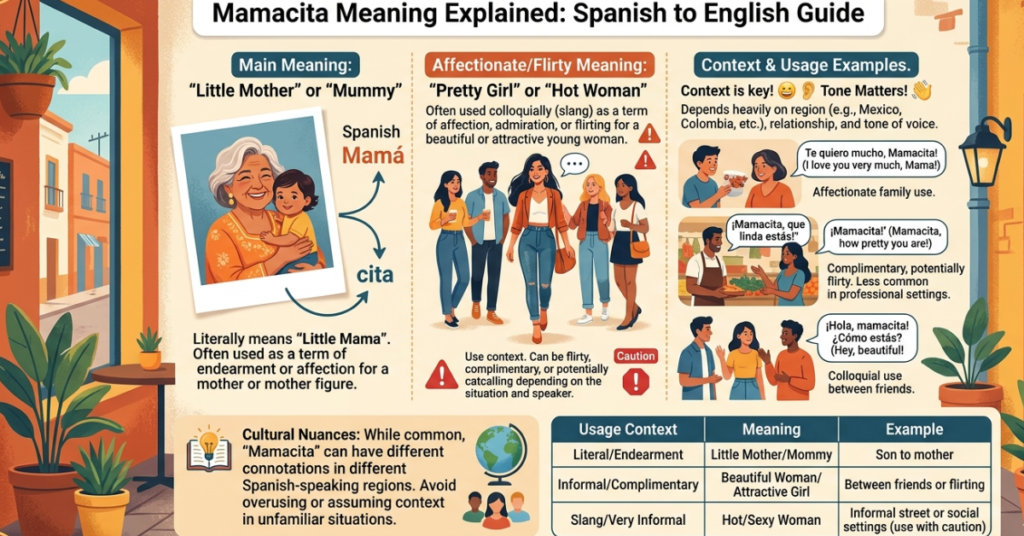
At its core, mamacita is a Spanish word derived from mamá (mother) with the diminutive suffix -cita, which makes it sound smaller, cuter, or more affectionate.
Mamacita Meaning in English
The closest translations include:
-
“Little mama”
-
“Pretty lady”
-
“Hot girl” (informal/slang)
-
“Sweetheart” or “baby” (in affectionate contexts)
However, none of these translations fully capture the tone—it often carries a mix of admiration, flirtation, or affection.
Mamacita Meaning in Spanish Context
Understanding the mamacita meaning in Spanish requires looking beyond direct translation. In many Spanish-speaking cultures, the word can be used in different ways depending on tone and relationship.
Common Uses:
-
Affectionate nickname: Used by partners or loved ones
-
Compliment: Referring to someone attractive
-
Playful slang: Among friends or in music
Important Note:
Tone matters a lot. In some situations, mamacita can come off as:
-
Charming and flattering
-
Or slightly inappropriate or objectifying
Context is everything.
Hola Mamacita Meaning Explained
The phrase hola mamacita meaning is straightforward but layered.
-
Literal translation: “Hello, little mama”
-
Natural meaning: “Hey, beautiful” or “Hi, gorgeous”
How It’s Used:
-
Often used as a flirty greeting
-
Common in songs, pop culture, and casual speech
-
May sound romantic or cheesy, depending on delivery
In real-life conversations, it’s best used carefully—especially if you’re not familiar with the person.
Is Mamacita a Compliment or Offensive?
This is where things get interesting.
When It’s a Compliment:
-
Between partners or people who know each other
-
In a friendly, respectful tone
-
In relaxed, informal settings
When It Might Be Offensive:
-
Said to strangers (can feel like catcalling)
-
In professional environments
-
If tone sounds disrespectful or overly sexual
Quick tip: If you’re unsure, it’s safer to avoid using it casually.
Cultural Influence of Mamacita
The popularity of the term has grown globally thanks to:
-
Music (Latin pop, reggaeton, hip-hop)
-
Movies and TV shows
-
Social media trends
Artists often use mamacita to convey admiration or attraction, which has shaped how non-Spanish speakers interpret it.
Similar Words and Synonyms
If you’re exploring related expressions, here are some alternatives:
-
Chica – girl
-
Hermosa – beautiful
-
Bonita – pretty
-
Mi amor – my love
-
Reina – queen
These are often safer and more universally accepted.
FAQs About Mamacita Meaning
1. What is the exact mamacita meaning?
Mamacita loosely means “little mama” but is commonly used to refer to an attractive or प्रिय woman in a playful or affectionate way.
2. What does mamacita mean in English slang?
In slang, it often means “hot girl,” “babe,” or “gorgeous,” depending on tone.
3. Is mamacita a bad word?
No, but it can feel inappropriate if used in the wrong context, especially with strangers.
4. What does “hola mamacita” mean?
It means “hello beautiful” or “hi babe,” typically used in a flirtatious way.
5. Can women use mamacita too?
Yes, women may use it jokingly or affectionately, though it’s more commonly used by men.
Conclusion
The mamacita meaning goes far beyond a simple translation. While it can mean “little mama” or “beautiful woman,” its real meaning depends on context, tone, and cultural setting. Whether you hear it in music or conversation, understanding its nuance helps you use—or interpret—it more accurately.
You can explore related terms to deepen your understanding of how Spanish slang and cultural expressions really work in everyday life.