
If you’ve ever typed “feening or feigning” into Google, you’re not alone. These two words sound similar but carry very different meanings—and mixing them up can completely change what you’re trying to say. Whether you’re writing professionally or just texting a friend, understanding the difference matters more than you might think.
In this guide, we’ll break down what feening and feigning mean, when to use each one, and how to avoid common mistakes—all in a clear, conversational way.
What Does “Feigning” Mean?
Definition of Feigning
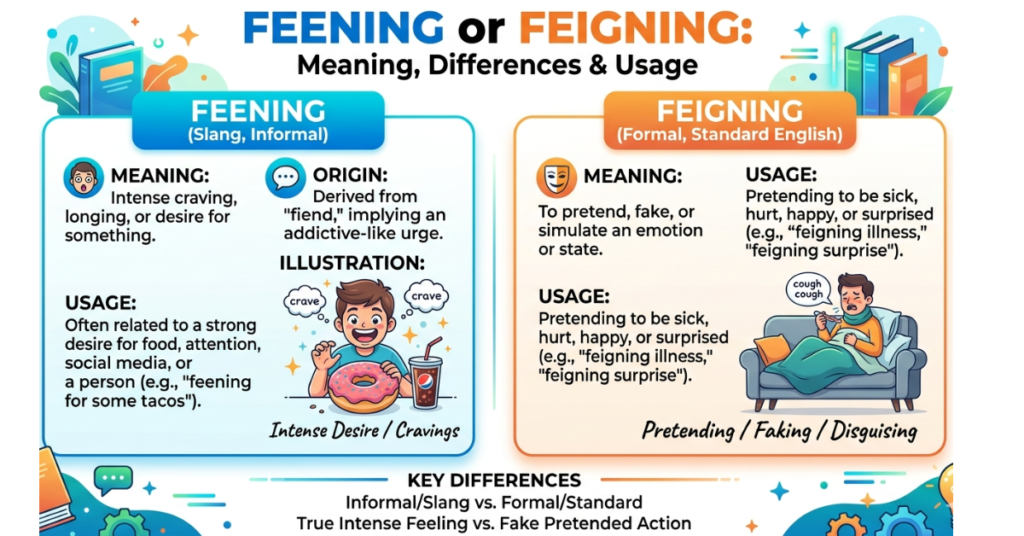
Feigning is a real English word that means pretending or faking something, especially emotions, illnesses, or intentions.
Common Examples of Feigning
-
Feigning interest in a boring conversation
-
Feigning illness to skip school
-
Feigning surprise at a party
Example Sentences
-
She was feigning excitement, but everyone could tell she wasn’t impressed.
-
He feigned ignorance when asked about the mistake.
Quick Tip
Think of feigning as “faking.” If you can replace it with pretending, you’re using it correctly.
What Does “Feening” Mean?
Is “Feening” a Real Word?
Technically, feening is not a standard dictionary word—but it has become widely used in slang, especially in casual conversations and online culture.
Slang Meaning of Feening
Feening (derived from “fiending”) usually means:
-
Craving something intensely
-
Being desperate for something
-
Having a strong urge or addiction-like desire
Common Examples of Feening
-
Feening for coffee in the morning
-
Feening for a new episode of a show
-
Feening for fast food late at night
Example Sentences
-
I’m feening for some pizza right now.
-
She’s been feening to travel all year.
Feening or Feigning: Key Differences
Understanding feening or feigning becomes much easier when you compare them side by side.
| Aspect | Feigning | Feening |
| Meaning | Pretending or faking | Strong craving or desire (slang) |
| Usage | Formal and standard English | Informal, slang-based |
| Example | Feigning illness | Feening for coffee |
| Context | Professional and academic writing | Casual speech, social media |
When Should You Use Feigning?
Use feigning when writing in:
-
Academic papers
-
Professional emails
-
Formal communication
-
Storytelling or literature
Example
The suspect was feigning confusion during the interrogation.
When Is It Okay to Use Feening?
Use feening only in informal contexts like:
-
Text messages
-
Social media posts
-
Casual conversations
Example
I’m feening for a vacation after this long week.
Common Mistakes to Avoid
Even fluent English speakers confuse feening or feigning. Here are some pitfalls to watch out for:
1. Using “Feening” in Formal Writing
Avoid slang in professional or academic contexts.
2. Confusing Meaning
Don’t use feigning when you mean craving something.
3. Spelling Errors
“Feining” or “feining” are incorrect spellings.
Easy Memory Trick
Here’s a simple way to remember:
-
Feigning = Faking (both start with “F”)
-
Feening = Feeling a strong craving
Why This Confusion Happens
The confusion between feening or feigning comes from:
-
Similar pronunciation
-
Influence of slang and internet language
-
Autocorrect and typing habits
As language evolves, slang terms like feening gain popularity, but they don’t replace formal words like feigning.
FAQs About Feening or Feigning
1. Is “feening” a correct word?
Not officially. It’s slang derived from “fiending,” commonly used in casual speech.
2. What does “feigning” mean in simple terms?
It means pretending or faking something.
3. Can I use “feening” in professional writing?
No, it’s best to avoid slang in formal contexts.
4. Are “feening” and “fiending” the same?
Yes, in most cases they’re used interchangeably to mean craving something.
5. Why do people confuse feening and feigning?
Because they sound similar but have completely different meanings.
Conclusion
Understanding the difference between feening or feigning is simpler than it first appears. One is about pretending, while the other is about craving. The key is context—formal versus casual communication.
If you’re writing something important, stick with feigning. If you’re chatting with friends, feening fits just fine.
Want to improve your vocabulary even more? Keep exploring commonly confused words—you’ll sharpen your writing faster than you think.