
Walk into any shopping mall or busy marketplace and you’ll likely see a mix of small stands and full stores selling products. This often raises a common question: kiosk or outlet—which one is the correct term to use?
While both are related to retail and sales, kiosks and outlets are not the same thing. Each refers to a different type of business setup, store size, and customer experience.
In this guide, we’ll break down the difference between kiosk or outlet, explain how each works in retail, and help you understand when to use these terms correctly.
Understanding the Meaning of Kiosk
Let’s start with the first part of the kiosk or outlet comparison.
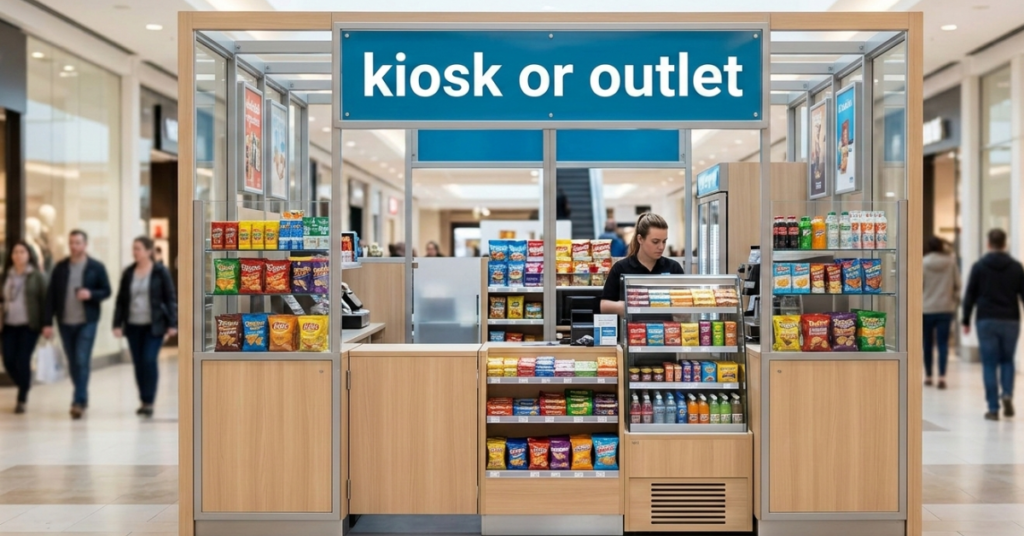
A kiosk is a small, standalone booth or stall used to sell products or provide services. These structures are usually located in high-traffic areas such as malls, airports, train stations, or shopping centers.
Unlike full retail stores, kiosks are compact and often open on multiple sides.
Key Features of a Kiosk
Kiosks typically have the following characteristics:
-
Small retail space
-
Located in hallways or open areas
-
Limited product selection
-
Quick customer interactions
Examples of Kiosk Businesses
You’ve probably seen kiosks selling:
-
Phone accessories
-
Snacks and drinks
-
Cosmetics
-
Jewelry
-
Tickets or information services
Because they require less space and lower investment, kiosks are a popular choice for startups and small retail businesses.
What Is an Outlet?
Now let’s look at the second part of the kiosk or outlet comparison.
An outlet is a retail store that sells products directly to customers, often at discounted prices. Outlet stores are usually part of a brand’s official retail network and may sell overstock, past-season items, or factory products.
Outlets are much larger than kiosks and operate like regular stores.
Key Features of an Outlet
Outlet stores usually include:
-
Larger retail space
-
Full product displays
-
Multiple employees
-
Brand-managed inventory
-
Wider product range
Examples of Outlet Stores
Common examples include:
-
Clothing brand outlets
-
Shoe outlets
-
Electronics outlets
-
Furniture outlets
Many well-known brands operate outlet stores in dedicated outlet malls.
Kiosk or Outlet: Key Differences
To better understand the distinction between kiosk or outlet, let’s compare them side by side.
| Feature | Kiosk | Outlet |
| Store Size | Small booth or stall | Full retail store |
| Location | Mall hallways, airports | Outlet malls or shopping centers |
| Product Range | Limited | Wide selection |
| Setup Cost | Low | Higher |
| Business Type | Small or temporary | Established retail store |
This comparison clearly shows that kiosks and outlets serve different retail purposes.
When Businesses Choose a Kiosk
Many entrepreneurs prefer kiosks because they are affordable and flexible.
Advantages of Kiosks
Businesses often choose kiosks because they offer:
-
Lower startup costs
-
Quick setup
-
High foot traffic exposure
-
Flexible lease agreements
For example, a startup selling phone accessories might begin with a kiosk before opening a larger retail store.
When Businesses Choose an Outlet
An outlet store usually requires a larger investment but offers greater long-term potential.
Benefits of Outlet Stores
Outlets are ideal for businesses that want to:
-
Sell large product inventories
-
Promote brand visibility
-
Offer discounted merchandise
-
Reach value-focused customers
Major global brands frequently operate outlet stores to clear excess inventory while maintaining brand presence.
Kiosk vs Outlet in Modern Retail
The debate around kiosk or outlet has become more interesting as retail evolves.
Today’s retail landscape includes several formats:
-
Pop-up shops
-
Mall kiosks
-
Factory outlets
-
Flagship stores
Each format serves a different marketing and sales purpose.
For example:
-
A kiosk focuses on quick sales and convenience.
-
An outlet focuses on brand presence and inventory sales.
Which Is Better: Kiosk or Outlet?
The answer depends on the business model.
A Kiosk Is Better If:
-
You are starting a small business
-
You have a limited product line
-
You want lower operational costs
An Outlet Is Better If:
-
You manage a larger brand
-
You need more retail space
-
You want to offer a wide range of products
Both options can be profitable depending on the business strategy.
Real-World Examples of Kiosk and Outlet Businesses
To better visualize the kiosk or outlet concept, here are some real-world examples.
Typical Mall Kiosks
-
Phone repair stands
-
Sunglasses kiosks
-
Perfume booths
Typical Outlet Stores
-
Nike Outlet
-
Adidas Factory Outlet
-
Levi’s Outlet Store
These examples highlight the scale difference between the two retail formats.
FAQs
What is the difference between a kiosk and an outlet?
A kiosk is a small retail booth usually found in malls or public areas, while an outlet is a full retail store that often sells discounted brand products.
Is a kiosk considered a store?
Yes, a kiosk is a type of retail store, but it is smaller and usually offers a limited selection of products.
Why are outlet stores cheaper?
Outlet stores often sell surplus inventory, past-season items, or factory-direct products, allowing them to offer lower prices.
Can a kiosk become an outlet?
Yes. Many small businesses start with a kiosk and later expand into a larger outlet store as they grow.
Are kiosks profitable?
Kiosks can be profitable because they have lower rent, smaller staff requirements, and high visibility in busy locations.
Conclusion
Understanding the difference between kiosk or outlet is important for both consumers and entrepreneurs. A kiosk is a small retail booth designed for quick sales in high-traffic areas, while an outlet is a larger retail store that often sells branded products at discounted prices.
Both retail formats serve different purposes in the marketplace. Kiosks offer flexibility and low startup costs, while outlets provide greater space, product variety, and brand presence.
Whether you’re starting a retail business or simply curious about shopping terminology, knowing the difference between kiosks and outlets helps you better understand how modern retail works.